

Australian Home Values Fall for Six Months, with 97% of Capital City Suburbs Declining: How Long Will the Downturn Last?
Home values continue to fall, sales have slowed considerably and unsold properties are accumulating. The cooling in Australia’s housing market is extending beyond prices to sales activity and the rental market.
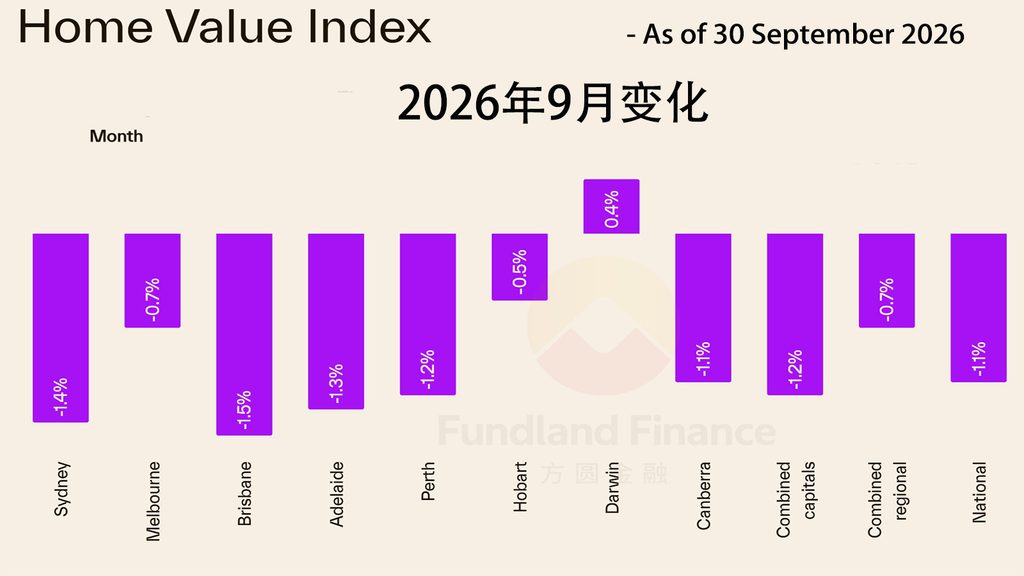
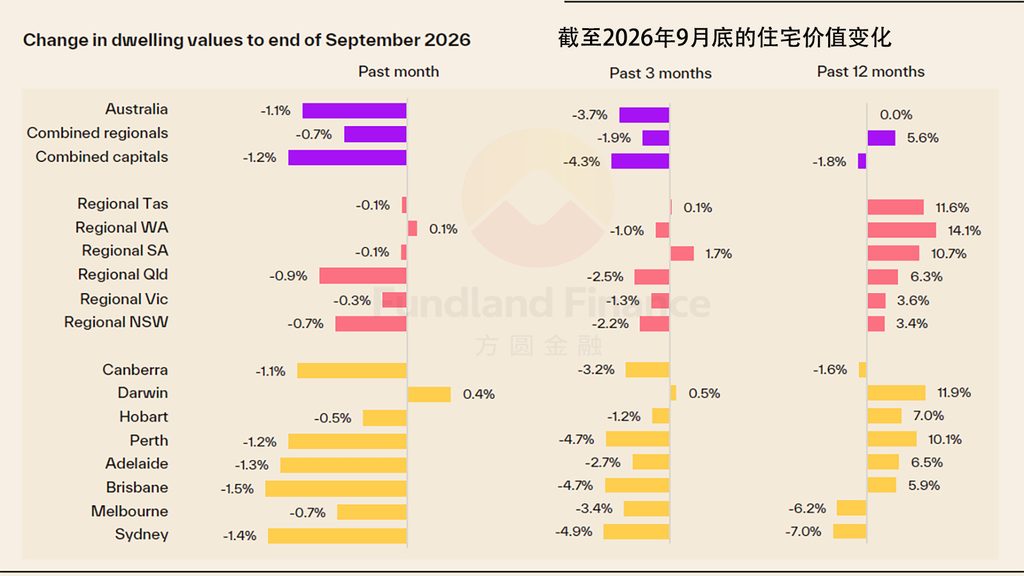
National home values fell 1.1% in September, marking the sixth consecutive month of declines. Values are now 5.2% below their March peak.
For buyers, more properties on the market mean more choice. However, high interest rates and limited borrowing capacity mean that many still find it difficult to buy, despite falling prices.
In this edition of Australian Finance Insights, we examine prices, sales, advertised stock and rental conditions to explain how Australia’s property market changed in September 2026, and the pressures and supporting factors that could shape the months ahead.
1. The Downturn Is Spreading, and Previously Strong Markets Are Cooling
The current correction now covers most markets. In September, every capital city except Darwin recorded a decline in home values, while 71% of regional markets also weakened.
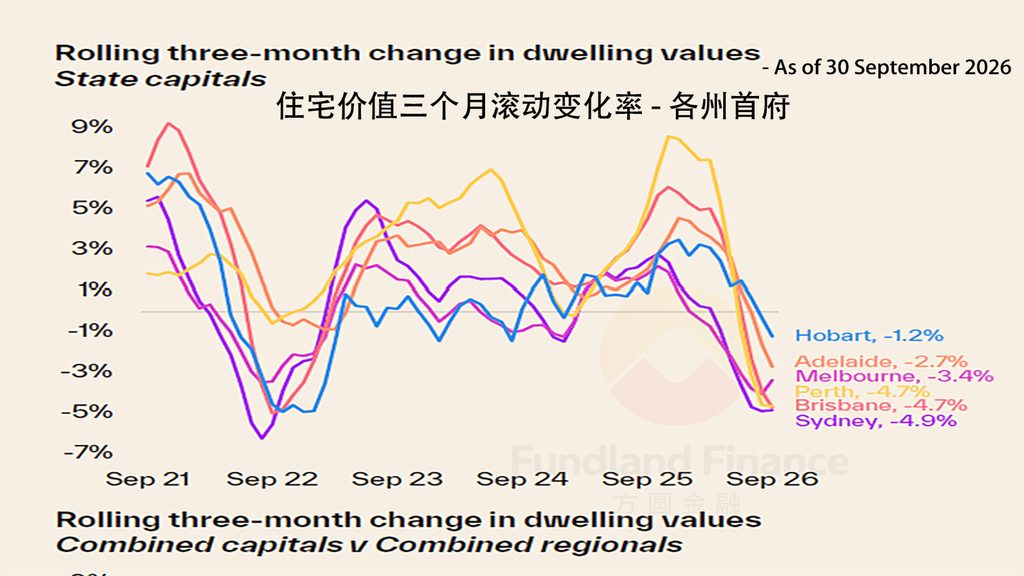
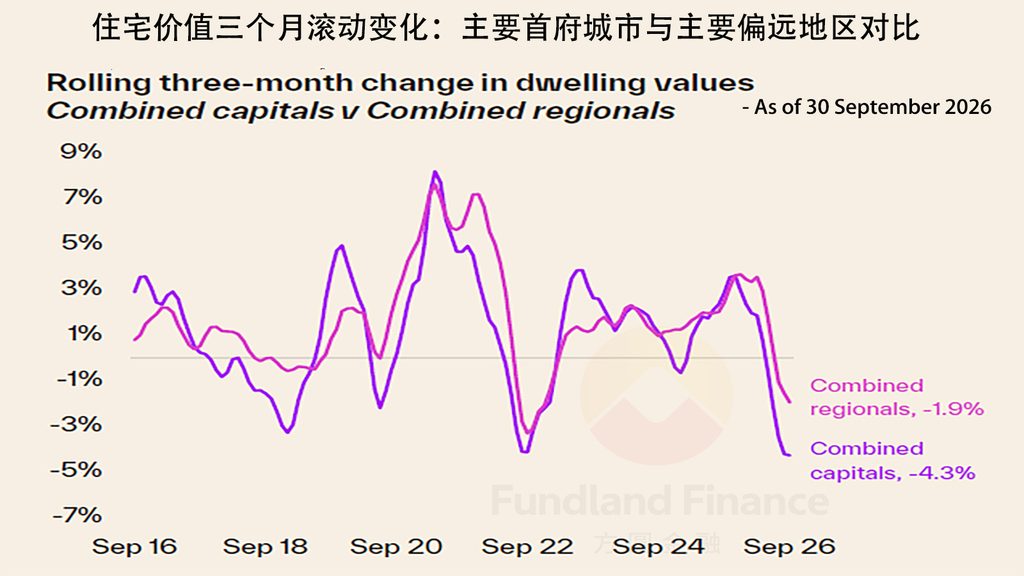
Over the past three months, home values declined in 97% of capital city suburbs. The slowdown is no longer confined to a handful of cities or individual areas.
Brisbane: September’s Decline Exceeded Sydney’s
Brisbane home values fell 1.5% in September, the largest monthly decline among the capital cities, compared with 1.4% in Sydney.
Brisbane was previously one of the stronger markets. Its changing performance shows that strong earlier growth does not necessarily protect a market from the pressure of declining purchasing power.
Sydney: Values Are 8.6% Below Their February Peak
Sydney remains one of the markets with the largest cumulative falls in this downturn. Home values are now 8.6% below their February peak, a slightly deeper decline than at the same stage of the 2022–2023 correction.
Melbourne: A Smaller Monthly Fall, but a Substantial Cumulative Decline
Melbourne values fell 0.7% in September, a relatively moderate monthly decline. However, values are now 7.2% below their most recent cycle peak, reflecting a substantial cumulative adjustment.
2. National Values Are Broadly Unchanged Over the Year, but Cities Differ Sharply
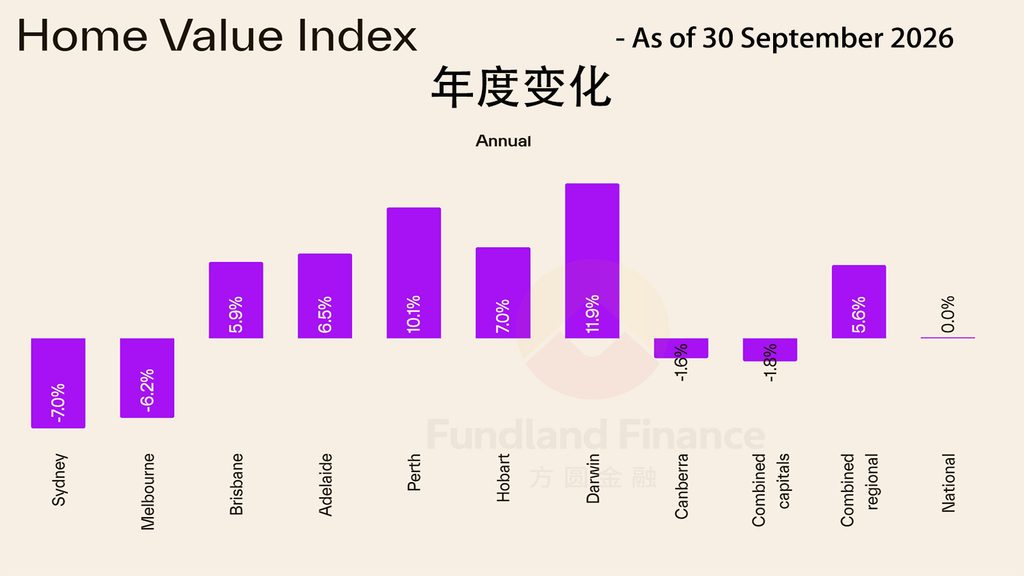
National home values have been broadly unchanged over the past 12 months, but that result masks considerable differences between cities.
| City / Market | Change in Home Values Over the Past 12 Months |
|---|---|
| Darwin | +11.9% |
| Perth | +10.1% |
| Canberra | −1.6% |
| Melbourne | −6.2% |
| Sydney | −7.0% |
| Combined regional markets | +5.6% |
| Combined capital cities | −1.8% |
Regional markets remain more resilient overall than the capital cities. Over the past 12 months, regional home values rose 5.6%, while combined capital city values fell 1.8%.
Annual and monthly changes measure different things. Annual growth reflects the cumulative movement over 12 months, while monthly changes show the recent direction. A market can still record annual growth even after it has started cooling.
3. Sales Volumes Are Falling, and Homes Are Taking Longer to Sell
The slowdown is evident in sales activity as well as prices.
Over the past three months, national home sales were 19.1% below the same period last year and 13.3% below the average for the corresponding period over the past five years.
Sales volumes fell 27.2% in Brisbane, 26.5% in Sydney and 24.2% in Perth compared with the same period a year earlier.
Fewer transactions can also affect related spending on removals, furniture and appliances, as well as state government stamp duty revenue.
Listing figures also reflect slower activity. Across the capital cities, new listings fell 9.2% compared with a year earlier, while total advertised stock increased 23.1%.
Fewer new listings alongside rising stock point to a key change: homes are taking longer to sell.
Median selling time across the capitals has increased from 23 days a year ago to 39 days. As unsold properties accumulate, buyers have more scope to compare properties and more choice.
However, greater choice does not necessarily prompt buyers to enter the market. Weak confidence and limited borrowing capacity remain important influences on purchasing decisions.
4. Rental Conditions Are Easing, but Vacancy Rates Remain Below Long-Term Levels
The national rental vacancy rate has risen to 2.0%, up from the record low of 1.5% in February. This is the highest level since January 2025.
However, it remains below the 3.3% average recorded over the ten years before the pandemic. Pressure on rental supply has not fully eased.
| City | Rental Vacancy Rate |
|---|---|
| Hobart | 3.0% |
| Sydney | 2.3% |
| Brisbane | 2.1% |
| Perth | 2.1% |
| Adelaide | 1.4% |
Among these cities, Hobart has the highest vacancy rate, while Adelaide remains the tightest rental market.
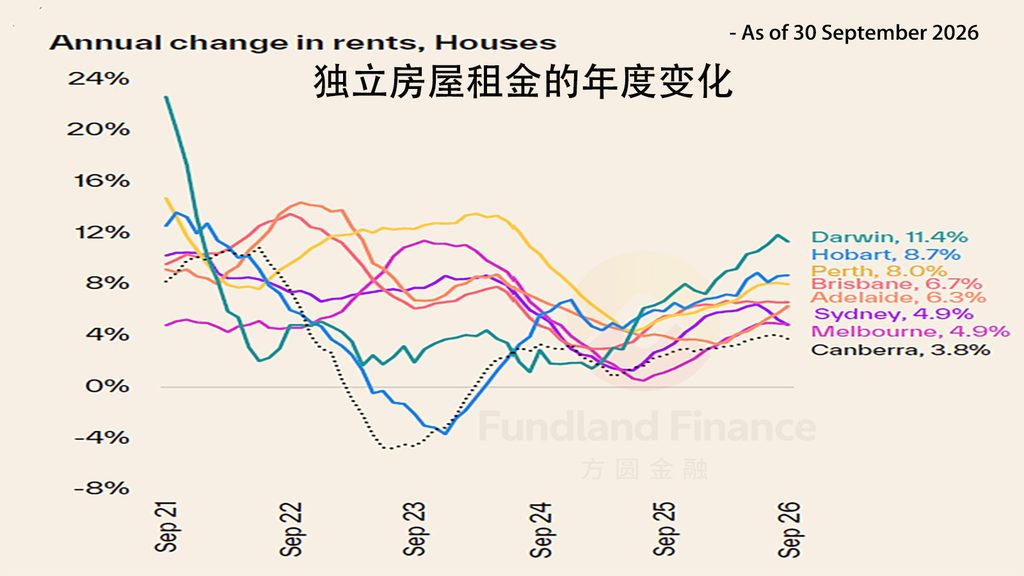
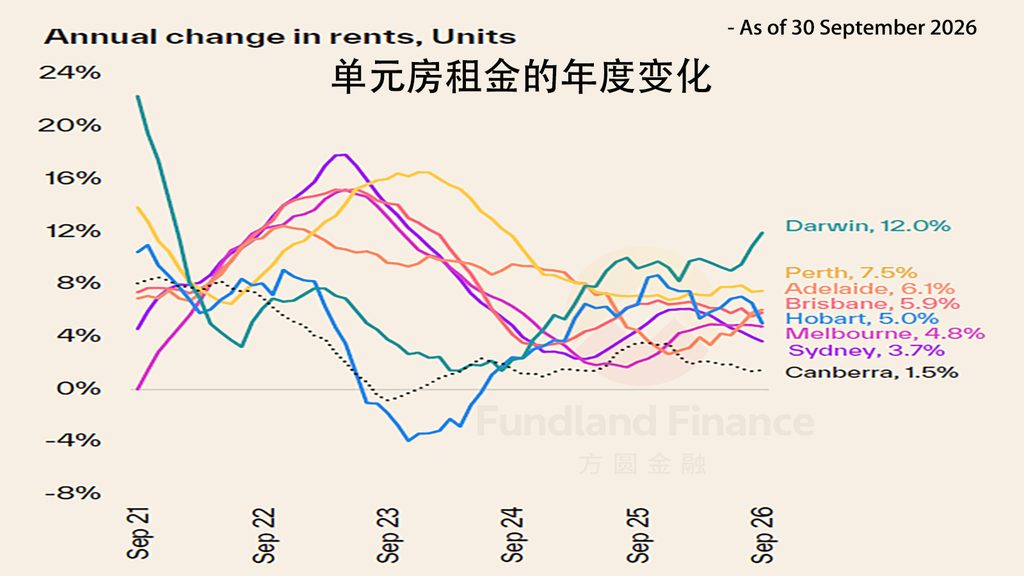
Rental growth is also slowing. Seasonally adjusted rents rose 0.3% in September, the smallest monthly increase since May 2025. Nevertheless, rents increased 5.5% over the past 12 months.
Slower rental growth does not mean rents are falling. Conditions are easing for tenants, but rental costs remain a burden.
5. Higher Gross Rental Yields Do Not Necessarily Mean Positive Cash Flow
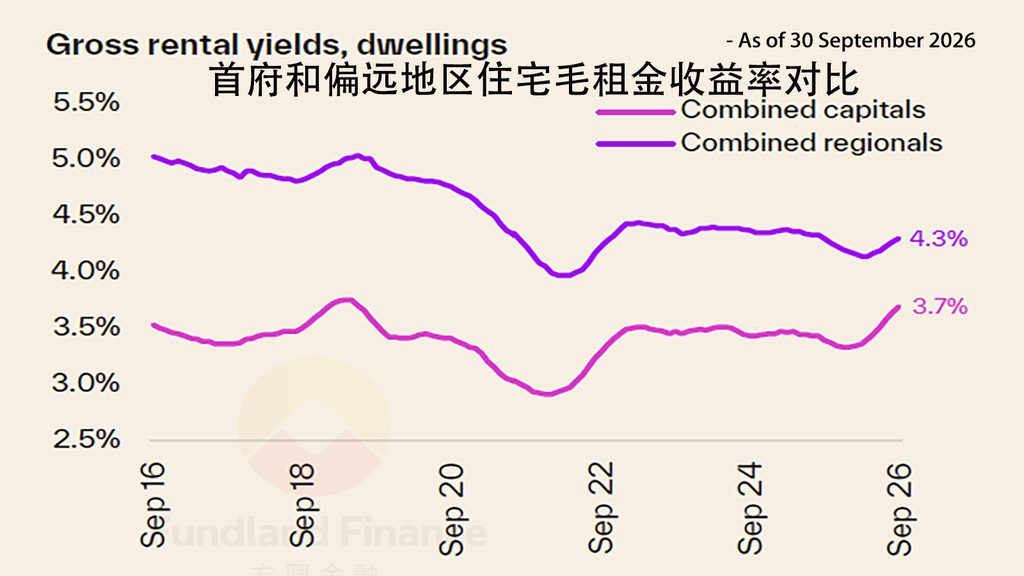
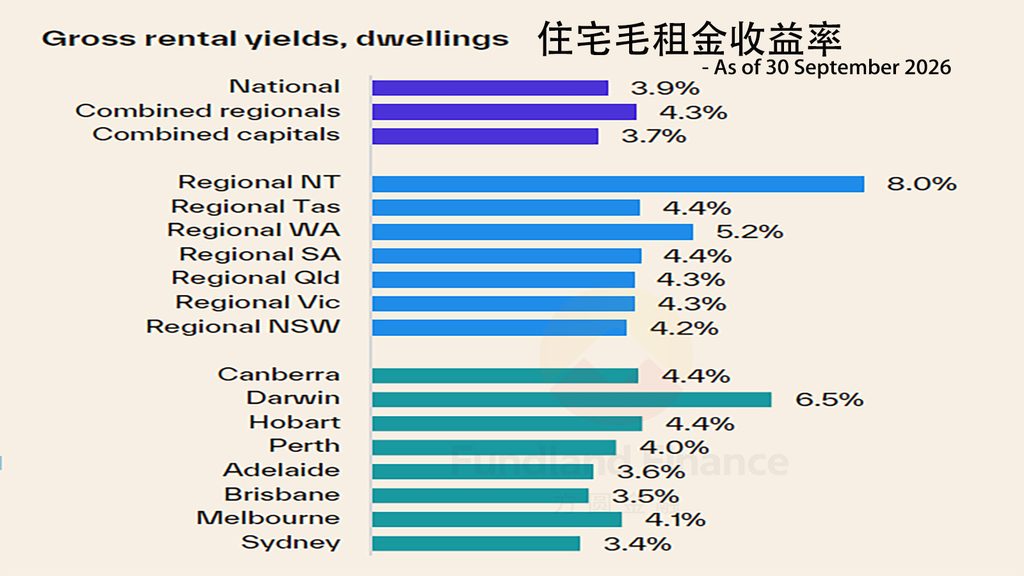
With home values falling and rents continuing to rise, the national gross rental yield has increased to 3.85%, its highest level since August 2019.
Among the capital cities, Sydney has the lowest yield, at 3.4%, while Darwin has the highest, at 6.5%.
Improving yields are worth watching for investors. However, gross rental yields do not deduct mortgage interest, insurance, property management fees, repairs or other holding costs.
Assessing whether an investment property can achieve neutral or positive cash flow requires a comparison of actual rental income with all expenses. With high interest rates and holding costs, an increase in gross yield may not translate into better cash flow.
6. The Months Ahead: Demand Is Under Pressure, but Support Remains
Current market conditions suggest that downward pressure on home values will continue over the coming months, for several reasons.
First, high interest rates reduce borrowing capacity. Higher rates increase repayments for existing mortgage holders and limit the amount new buyers can borrow.
Second, living costs and income growth constrain purchasing power. Even when property prices fall, households may not have more money available for a deposit or mortgage repayments.
Third, the barriers facing first-home buyers remain high. Home values are still high relative to incomes, and saving a deposit remains difficult for many buyers.
Fourth, weak confidence delays purchasing decisions. Uncertainty about prices and household finances may encourage more buyers to wait.
Negative gearing and capital gains tax policy also influence investor decisions. The details, commencement dates and scope of any relevant policies should be checked against formally published rules.
At the same time, two important factors continue to support the market.
The labour market remains relatively resilient. Although employment conditions are gradually softening, their overall strength helps limit the risk of mortgage arrears and forced sales.
New housing supply remains constrained. Construction costs, capacity bottlenecks and project viability challenges make a substantial short-term increase in new supply difficult. These constraints may help limit the extent of price falls.
7. Buyers Have More Choice, but Affordability Still Matters
The risks in Australia’s housing market remain tilted towards further declines. High interest rates, limited purchasing power, weak confidence and living cost pressures are weighing on demand. Employment resilience and constrained new housing supply provide some cushioning.
On this assessment, a continued gradual decline in home values appears more likely, although performance may continue to vary between cities, price brackets and buyer groups.
Prospective buyers need to consider their borrowing capacity, repayment commitments and cash flow buffer alongside property prices. Investment property owners also need to monitor rents, vacancy risks and actual holding costs.
Are homes taking longer to sell in the city you follow? Are you seeing more asking price reductions? Share your observations in the comments.
Follow Australian Finance Insights for updates on Australian property, mortgages and financial news.
This article provides general information only and does not constitute personal financial, investment or tax advice.